

Data as the foundation for the future: BigData success stories with Slovenian utility companies
In a world, where complexity is rapidly increasing and decisions must be made faster than ever, data is no longer just a byproduct – it has become a guiding force. When used with purpose, it enables organizations not only to improve efficiency, but to build resilience, ensure stability, and shape a smarter future.
The energy sector needs more than traditional tools to operate efficiently and make informed decisions. They need platforms capable of integrating massive volumes of data, processing it in real time, and turning it into actionable insight. With this in mind, TROIA partnered with Slovenia’s major electricity distribution companies, to design and implement a comprehensive Big Data Management Platform. Projects, that represent a shift toward a more connected, intelligent, and future-ready energy ecosystem.
The projects were designed to support utilities transform into data-driven organizations. The goals extended beyond simple data storage. The platform was built to strengthen decision-making, enable advanced analytics and artificial intelligence, improve data governance, and provide a secure foundation for digitalization across the company. By centralizing technical and operational data, the solution created a single environment where information from multiple systems could be integrated, managed, and used more effectively.
One of the platform’s strength lies in its ability to integrate diverse data sources:
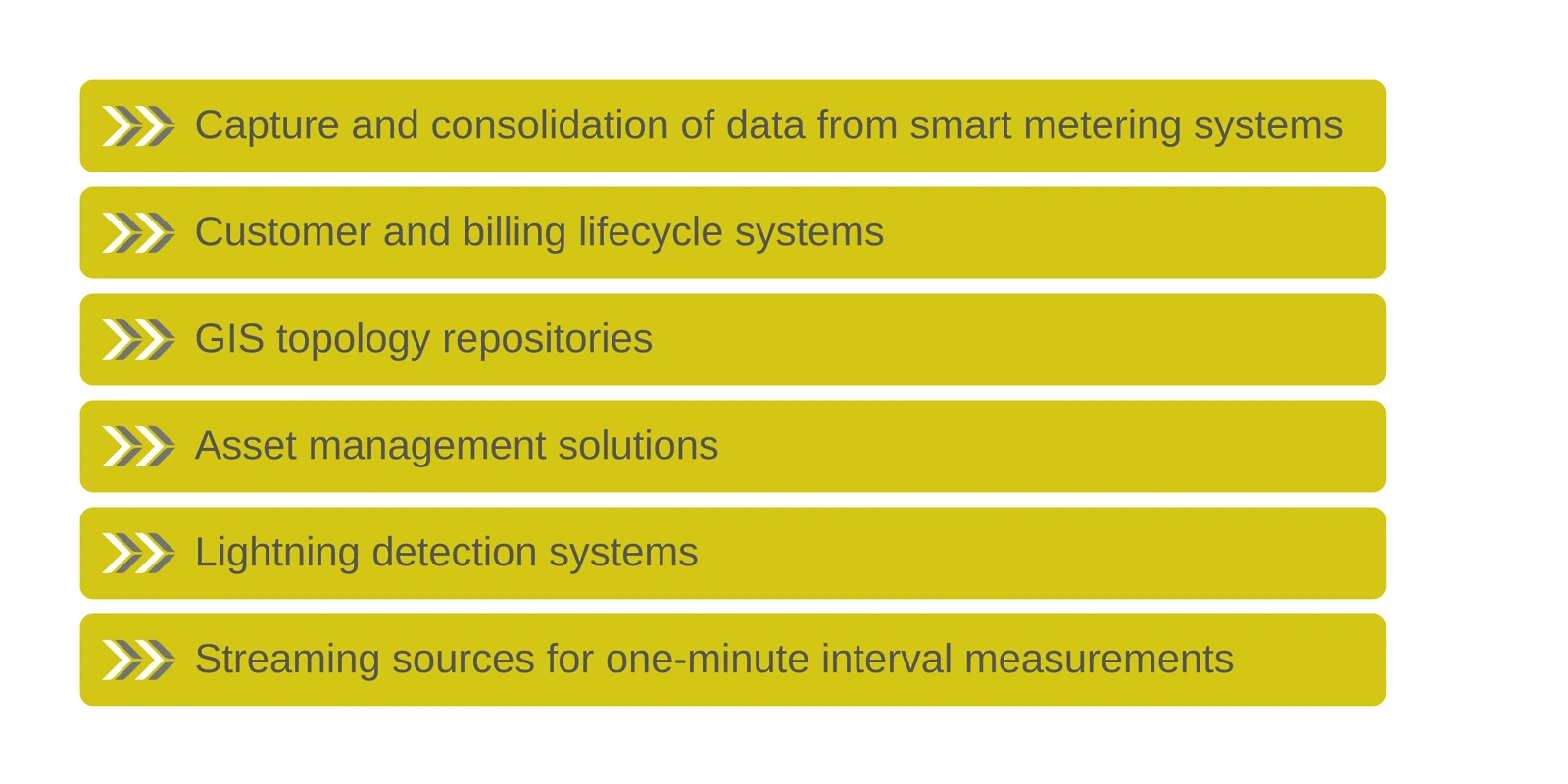
All that provides utility companies with continuous access to historical and live operational data, enabling deeper analysis of network behaviour, asset performance and energy consumption patterns.
Challenges before Big Data Management platform implementation
- Undetected issues / communication failures, which meant requiring manual inspection and slower repair cycles.
- Poor colleration across systems, that resulted in prolonged root cause analysis and obscured the true scale of grid losses or transformer stress.
- Inefficient regulatory bulk processing, that was slow, error-prone, and costly.
- Limited predictive capability, where predictive maintenance and theft detection models were impractical, due to the lack of information.
Actual examples of where Big Data platform makes a difference
- Topology-aware dashboards, allowing operators to identify overloaded assets and critical areas quickly.
- Communication health monitoring enables proactive remediation, instead of correcting failures after they already happened.
- Automated regulatory and bulk exports, which previously required manual or external processing, are now mass processed to meet regulatory reporting.
- Anomaly and fraud detection pipelines enable targeted inspections by flagging suspicious patterns.
- Data-as-a-service and APIs demonstrate secure message exchange flows.
- Self-service analytics offers data catalogue curated answers for operational questions.
Beyond technology, the projects were also driven by strategic business objectives. They established the foundation for better data stewardship, stronger trust in reporting and analytics, controlled data access, processing of sensitive information and compliance with GDPR and other legal requirements.
Ultimately, the Big Data Management platform is more than an IT solution. It is a strategic enabler of digital transformation for all utility companies, helping them create a stronger analytical backbone for decision-making, operational excellence and future innovation. Projects demonstrate how modern data platforms can reshape the way utilities understand and manage their networks.
Analytics USE CASES with the biggest business impact
Analytics use cases show how Big Data platform translates data into measurable business value, helping utilities reduce losses, improve reliability, increase operational efficiency, and make faster, better informed decisions across the grid.
Grid loss analytics at transformer and distribution line level
Combines network topology with measured inputs to pinpoint where losses occur with far greater precision. This gives utilities the visibility to prioritise investments, uncover hidden inefficiencies, and identify anomalies linked to non-technical losses, delivering strong strategic value through lower technical and commercial losses.
Meter communications monitoring and non-data detection
Enables early identification of PLC, radio, and 4G communication outages before they escalate into larger operational issues. By improving data completeness and reducing unnecessary truck rolls, utilities gain immediate operational saving while strengthening service continuity.
Transformer overload observability
Provides continuous insight into which assets are exposed to sustained overload conditions and ranks them by severity. This allows operators to act earlier, prevent avoidable outages, and make reinforcements planning decisions based on real operating conditions, consequently improving both reliability and asset management.
Anomaly and fraud detection
Uses consupmtion patterns, meter events, and behavioural signals to identify suspicious activity and support targeted field inspections. The result is a more focused revenue protection strategy, faster investigation cycles, and a clear financial return through reduced theft and leakage.
Events analytics across infrastructure and measuring devices
Connects maintenance events, work orders, and meter data to evaluate the real impact of operational interventions. This creates a pathway toward predictive maintenance, better planning, and greater field efficiency, turning fragmented event data into actionable performance intelligence.
Collectively, these use cases influence some of the most important utility KPI's: loss percentage, outage duration, meter data completeness, asset utilisation, and field operations cost. Together, they show how advanced analytics can move from technical capability to tangible business impact.
Get more information on how our solutions can help your organization.
SMARTASSETCON 2026 REGISTRATION
Next article: How is IBM Maximo Application Suite secure by design?